christopher gerteis

← Cultural Navigators

The method

What the record shows

Three worked extracts from an East Asia port library, in the form they reach a product team

Most East Asian itinerary copy is written from English-language sources, and English-language sources on these ports are thin, old, and largely derived from each other.

What follows is the research as a product team receives it. The same material, cut for a room, is what the onboard lectures are made of.

The claims are checkable; that is the whole proposition.

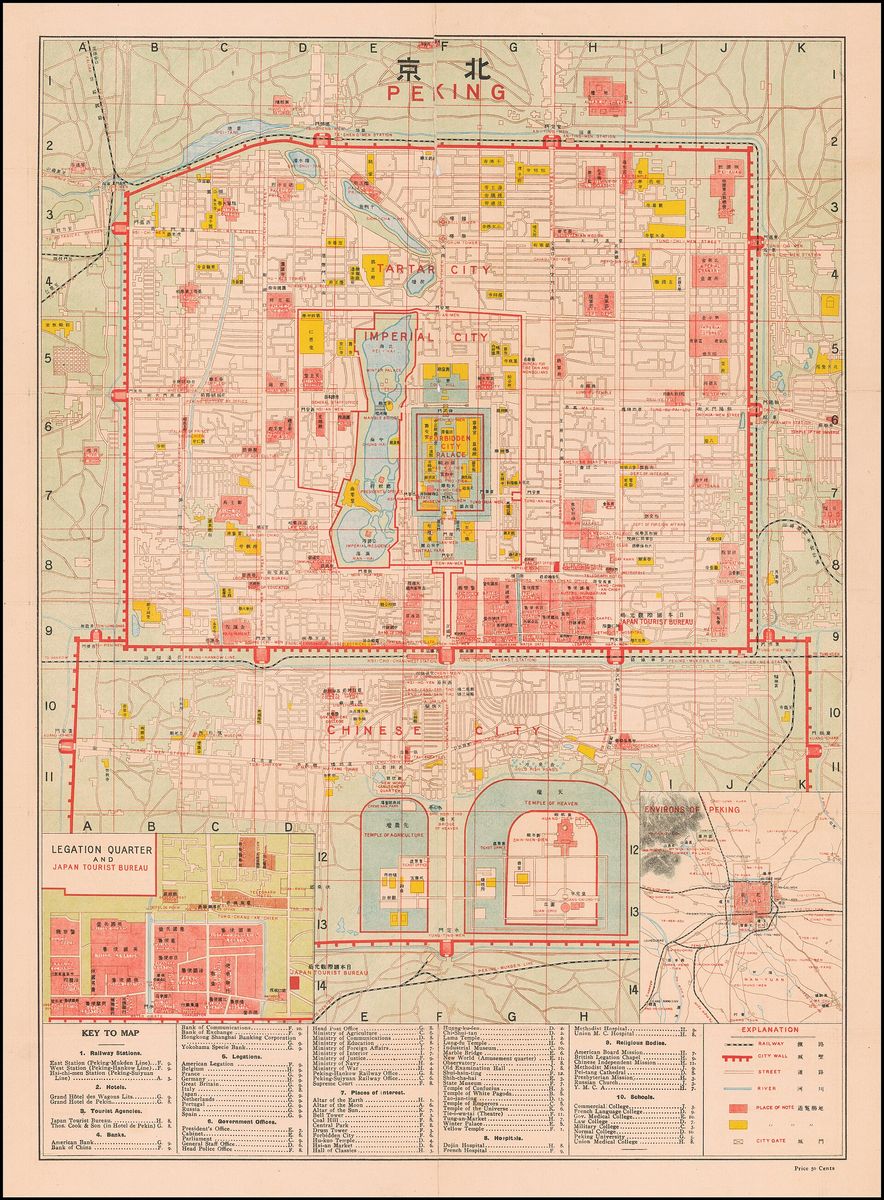
A Japan Tourist Bureau map and guide of Beijing, about 1925, printed in red and pink with the city walls and legation quarter marked.
Map and guide of Beijing, Japan Tourist Bureau, c. 1925. Public domain. The guidebook apparatus that still shapes how these ports are described.
Three worked extracts

From the port library

What the copy says, what the record shows, and what the difference is worth on board.

01

Karatsu

What the marketing copy usually says

A small castle town on the Genkai Sea, known for pottery and an autumn festival.

What the historical record shows

The name reads as “the port to the continent” — kara here is the mainland at large rather than any one dynasty, and the harbour was named for its outward traffic rather than for itself; it faces the Korean peninsula across the Genkai Sea. Karatsu ware already existed in the 1580s, built on Korean-derived technique, and the potters carried back to Kyūshū during Hideyoshi's invasions of the 1590s vastly expanded it; Hagi ware, on the Japan Sea coast, was founded outright by Korean potters brought from the same campaigns. The old ranking of tea wares runs ichi Raku, ni Hagi, san Karatsu — and the second and third both rest on Korean potters and Korean technique. The aesthetic most often described to guests as quintessentially Japanese carries a Korean lineage that the ranking itself records and the tour script omits.

What this changes on board

A ship calling at both Karatsu and Busan is sailing one story, not two. That is a route theme, and at present nobody is using it.
02

Hashima

What the marketing copy usually says

Gunkanjima, “Battleship Island” — an abandoned mining city, a UNESCO World Heritage Site, the model for a Bond-film villain's lair.

What the historical record shows

The 2015 inscription is titled Sites of Japan's Meiji Industrial Revolution, and its celebrated period frame runs to 1910; the Korean and Chinese forced labour at Hashima belongs to the late 1930s and the war years, after that frame closes. So part of what Tokyo and Seoul are fighting over is where the site's history is taken to end. But the boundary does not settle it: at inscription Japan undertook to present the fuller history, wartime labour included, and Seoul's charge — pressed since in successive UNESCO World Heritage Committee decisions — is that it did not. The dispute was built into the moment of inscription, less a disagreement about facts than about how much of the record the celebrated frame is allowed to hold.

What this changes on board

Guests raise this at dinner, and crew currently answer from a fact sheet. The useful version is not a position on the dispute. It is an explanation of why the dispute exists, which is defensible in a way that a position is not.

03

Hiroshima

What the marketing copy usually says

The Peace Memorial Park and the A-Bomb Dome, usually paired with Itsukushima in a single day ashore.

What the historical record shows

Hiroshima was chosen as a target partly because of what it already was. Imperial General Headquarters relocated there during the war with China in 1894–95, and the port at Ujina was the principal embarkation point for troops crossing to the continent for half a century. The city's status as a military-administrative centre is what the guide's account of 6 August 1945 tends to leave out, and it is also what makes the Korean victims legible: they were in Hiroshima because Hiroshima was a mobilisation city. The memorial to them stood outside the park until 1999.

What this changes on board

The standard Hiroshima excursion is the most emotionally loaded and least historically prepared morning on any Japanese itinerary. Twenty minutes of framing the evening before changes what guests are able to see.

The library covers every port on the principal East Asian routes, at this depth, refreshed annually.

Calendar against record

From a sensitivity register

A season's calendar set against the dates the ports carry. An extract:
DateWhere it landsWhy it matters
1 MarchBusan, JejuKorean Independence Movement Day. Commemorates the 1919 rising against Japanese colonial rule.
23 JuneNahaOkinawa Memorial Day. Marks the end of organised fighting in 1945; observed locally, largely invisible on the mainland.
6 and 9 AugustHiroshima, NagasakiMemorial ceremonies. Heavy domestic and international press; the ceremonies heavily attended.
15 AugustAny Japanese port, and any Korean portThe end of the war in Japan and Liberation Day in Korea. One date, two national narratives, and a route that may call at both within a week.

An itinerary is committed months before anyone notices which dates it lands on. The register exists so the noticing happens first.

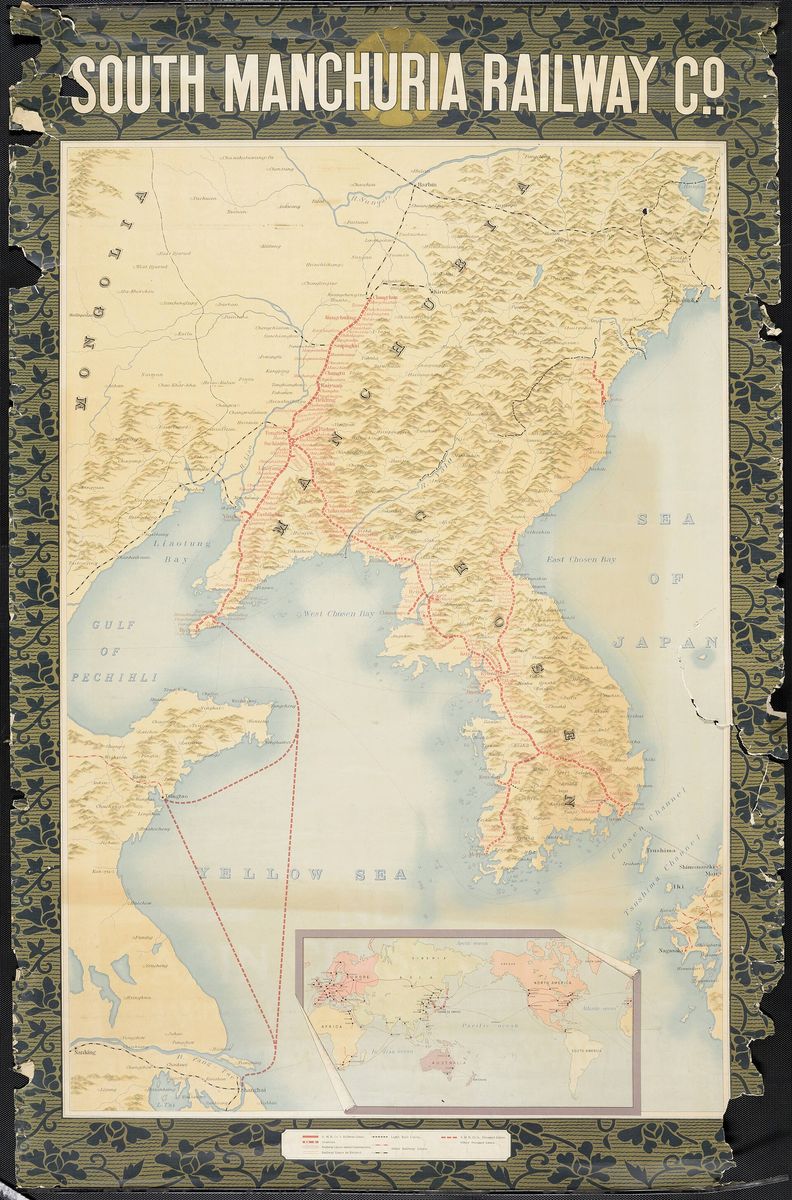
South Manchuria Railway Company map of South Manchuria and Korea, showing rail routes across the peninsula and the Yellow Sea.
South Manchuria Railway Co., map of South Manchuria and Korea, 1906/1945. USC Libraries, public domain. The routes these ports were once organised around still shape what they commemorate.
Boundaries

What this is not

Not a speaker bureau.

In the enrichment market as publicly documented, guest lecturers are typically unpaid and placement agencies charge the speaker rather than the line. A supply chain in which the content provider pays the intermediary produces the quality it prices for.

Not a marketing agency.

The practice supplies the evidence and the architecture. Visual execution and channel delivery stay with the operator's own teams.

Not an argument that guests are demanding scholarship.

No published survey isolates demand for intellectual content among ultra-luxury cruise guests specifically. A practice that claimed otherwise would be making exactly the kind of unsourced assertion it exists to prevent.

Start with one route

One itinerary, read end to end against the regional record — a port file for every call, a sensitivity register for the sailing dates, and a named source for every claim. Fixed fee, dated delivery.

See how an engagement begins